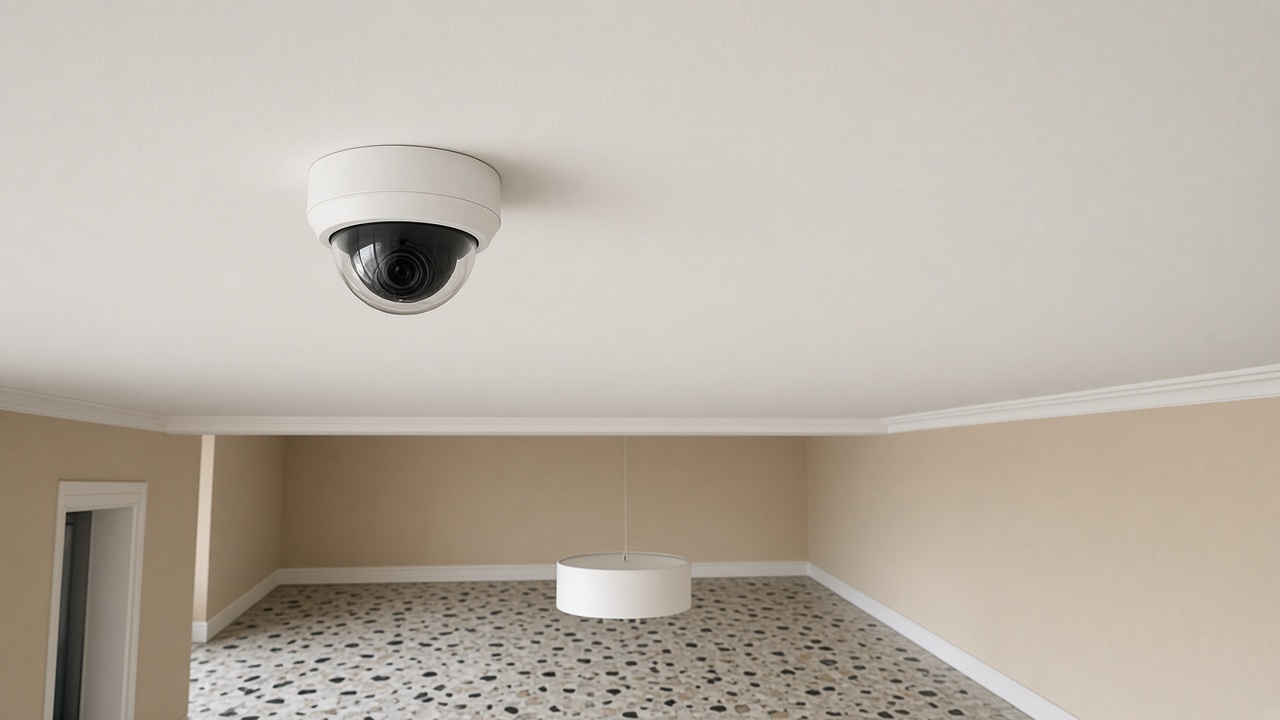
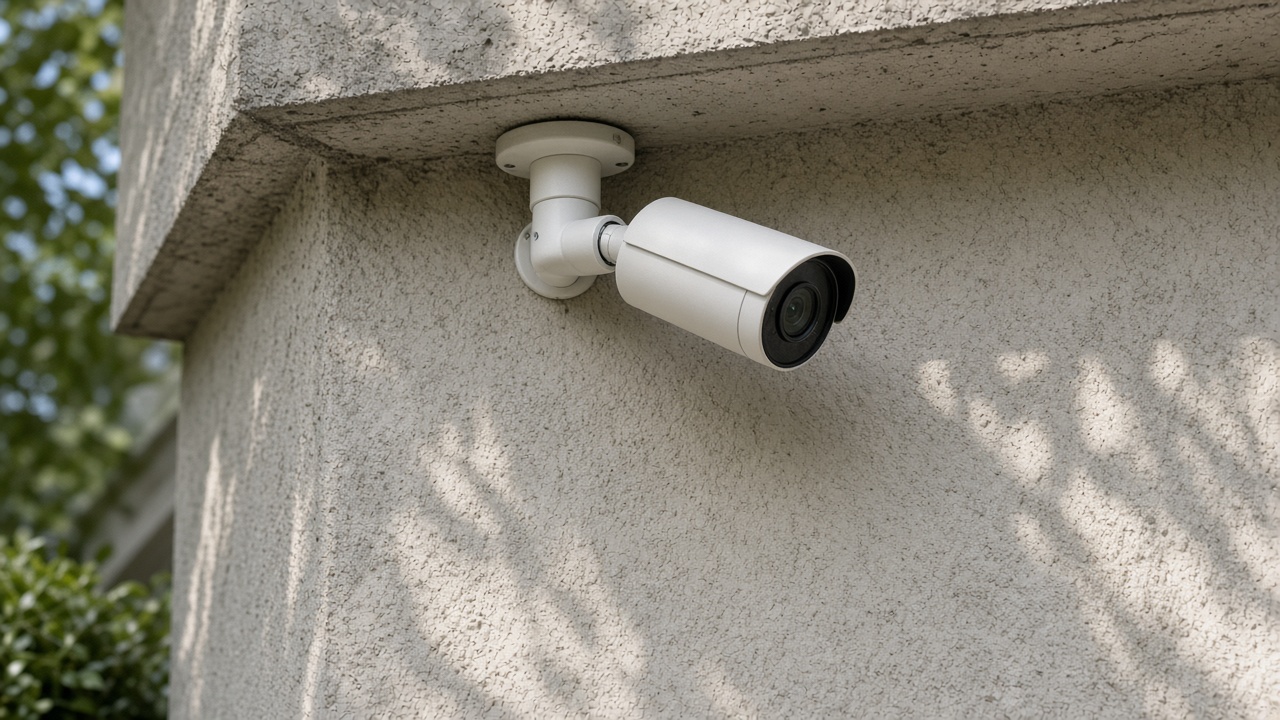
A dome on the lobby ceiling, a bullet on the stair, a box under the eave, and a recorder in a cupboard with a key. That is the system. The committee decides who may open the app.
Lobby camera, mounted on the ceiling where anyone entering can see the dome.
In sightWhat is visible. The dome, the bullet, and the box under the eave are mounted where a person can already see them.
15 mCable run assumed on the four-camera price and on an extra camera. A longer run is measured before we drill.
14 daysHow long a recording stays if the committee does not choose 7 or 30. Then the disk overwrites itself.
5,450ILS, VAT included. Four visible cameras, recorder, 2 TB disk, four signs. Common areas only.
The lobby is not the door station
The camera in the lobby records the common room: who came through, roughly when, from an angle the committee agreed. It does not ring a flat and it does not release the strike. If the picture of the visitor at the street door is what residents want while they decide whether to buzz someone in, that is a video door station, priced separately.
We put the lobby camera high enough to see the entrance path, and low enough that it is obvious. If the frame would include a flat door standing open into a living room, we shift it until the flat is out of the picture. The chair walks the angle with us before we leave the ladder.
Outdoor camera under an eave, in daylight, aimed at a door the building owns.
Outside, still obvious
An outdoor camera sits under an eave or on a bracket a person can see from the path. Daylight colour is what the committee usually wants; we do not sell a night picture as if it were a portrait. Rain on the lens is a maintenance item, which is why the annual visit includes cleaning.
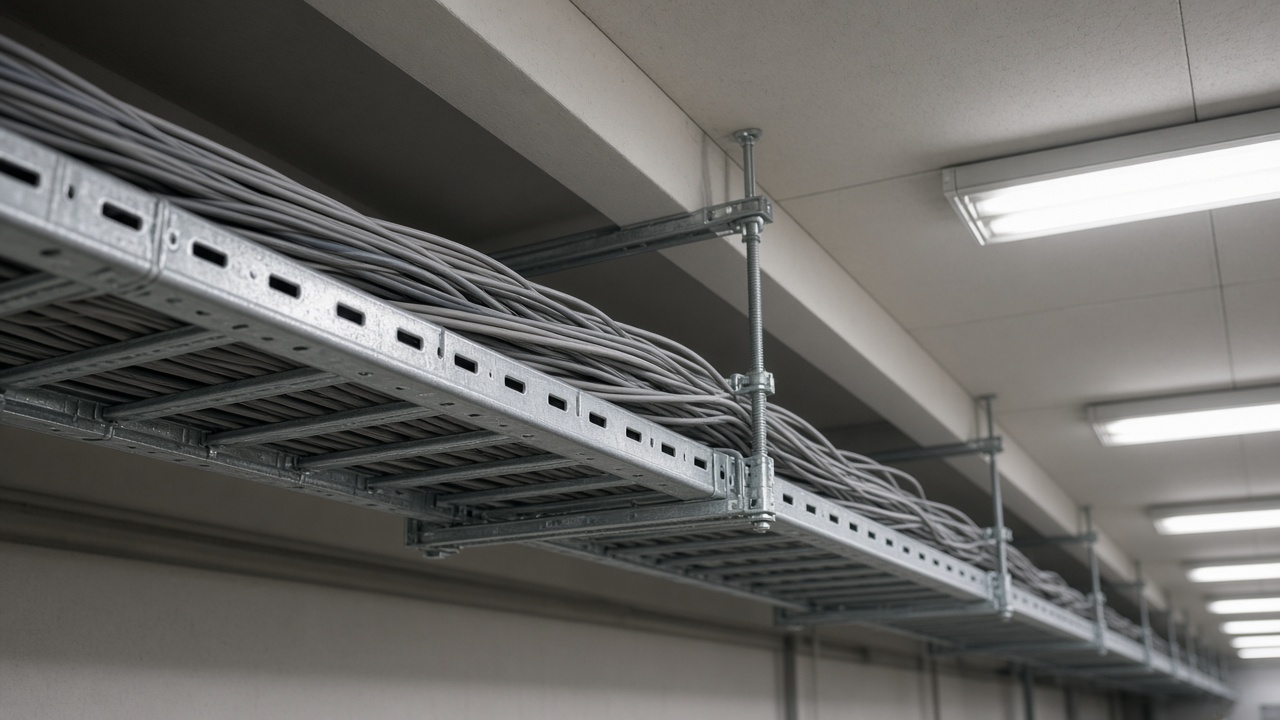
The cable comes back on a tray, in a conduit, or in a short run we can point to. We do not leave a loop of cable on a window ledge. If the run is longer than 15 metres, or it has to cross a roof, it is not the “extra camera” line on the card. We measure it and we say the number before we drill.
Cable tray. On an office job the runs live up here, labelled at the cupboard end, not at the camera.
The cable has to be findable next year
On a stair we usually use conduit or the old riser. In an office we use the tray if the landlord allows it. Each camera is marked at the recorder end with a plain word: entrance, lobby, stair A, gate. We do not rely on a colour that fades.
PoE, for an IP set, means one cable carries the picture and the power, from a switch in the same cupboard as the recorder. The eight-camera price on the rate card includes that switch. It does not include a new electrical board. If the cupboard has no socket, an electrician has to add one, and that person is not always us. We will say so on the quote.
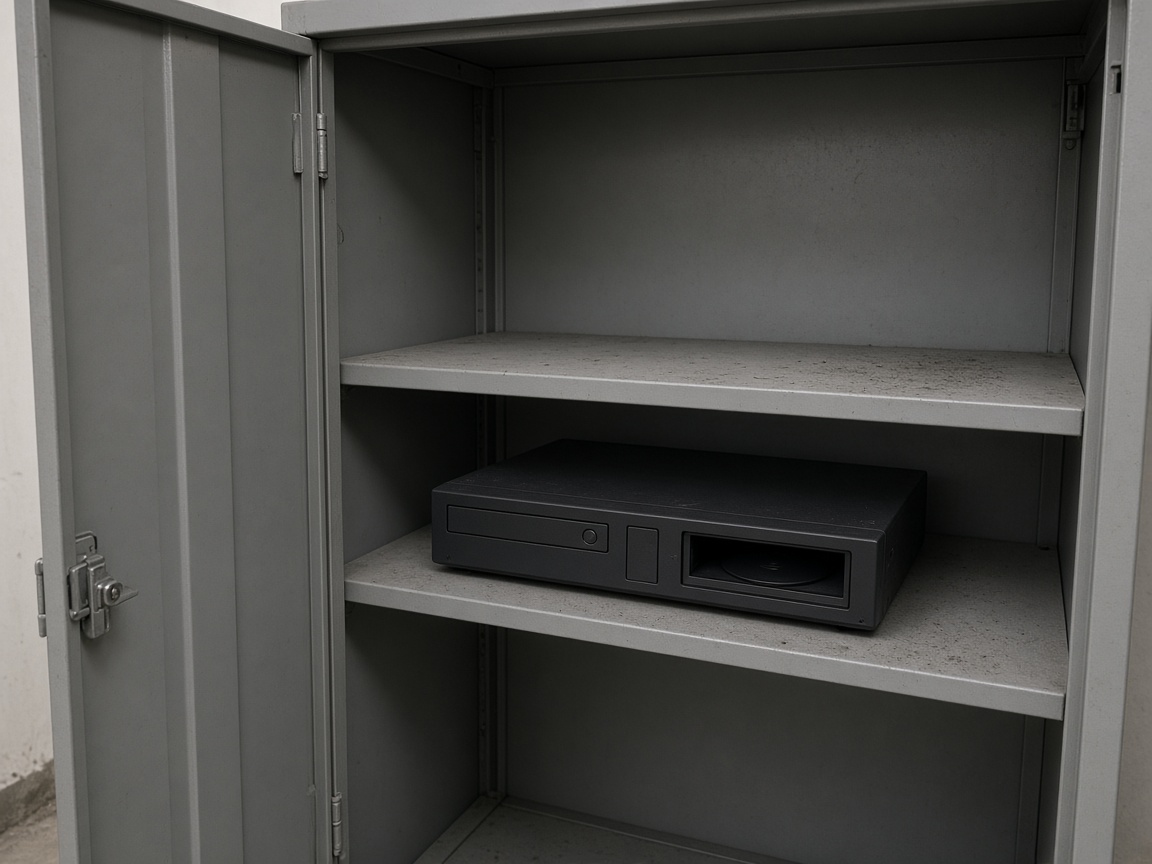
Recorder cupboard, slightly open for the photograph. On a finished job the door is shut and the key is with the committee.
The recorder stays in the building
The box that holds the disk sits in a cupboard the committee can lock. A cleaner’s closet, a meter room, a small cabinet we supply if the building has nowhere else. It is not in a flat, because the chair changes and the flat owner goes on holiday. It is not in our workshop.
We set the clock, the overwrite period the committee chose, and one admin user. Seven, fourteen, or thirty days. Fourteen if nobody chooses. The disk is the building’s. When it fails, the annual visit is when we usually notice, unless the chair calls because the app has gone blank. A failing disk is a part, quoted before we fit it.
Signs in Hebrew and English go up at the entrance the same day. A set of four, if you need them without a camera job, is 240 ILS on the card. They are not optional on a camera job. People should know the common area is recorded, who to ask, and that the picture is kept for a limited time.
What we will not aim at
A flat door from close range, a window into a bedroom, a neighbour’s balcony, or a microphone on the stair. If the committee’s sketch includes any of those, we redraw the sketch or we decline the job. The useful places are dull and they work: the street door, the lobby, the landings, the bin room, the gate, the office reception.
Stair cameras are written up on the buildings page, because the landing and the flat doors argue with each other and the framing is the whole job. Offices, where the monitors are in a room the staff already use, are on that page too.
The app is the committee’s
One password holder. Extra names only in writing. No shared “building123” login. If you want us to keep a service login, that is a sentence on the retainer, and we use it to repair, not to browse. When the retainer ends, we delete that login in front of the chair or we write down that the chair has changed the password and we no longer have it.
Export of a clip is the password holder’s job. If they would rather we did it, book a service visit and say which hour on which day. We copy the clip to a disk the committee brings, or to a link the chair opens, and we do not keep our own copy.
We store one essential cookie so this choice sticks. If you accept, we also store the last city you picked on the quote form, for 30 days. We do not run advertising or analytics cookies. Cookie notice.